The Practice
This Ventura family dental practice has been serving the same community for over four decades. The doctors are respected, patient reviews are excellent, and word-of-mouth has kept the schedule full for years.
But when a new patient in Ventura typed "dentist near me" into Google, this practice was nowhere to be found. A dated, template-based website — built over a decade ago on a dental-specific platform — was invisible to modern search engines and completely unusable on mobile. Local SEO and proper Google Business Profile optimization are what drive patients to search the first time.
Before and After
Before — Template Site
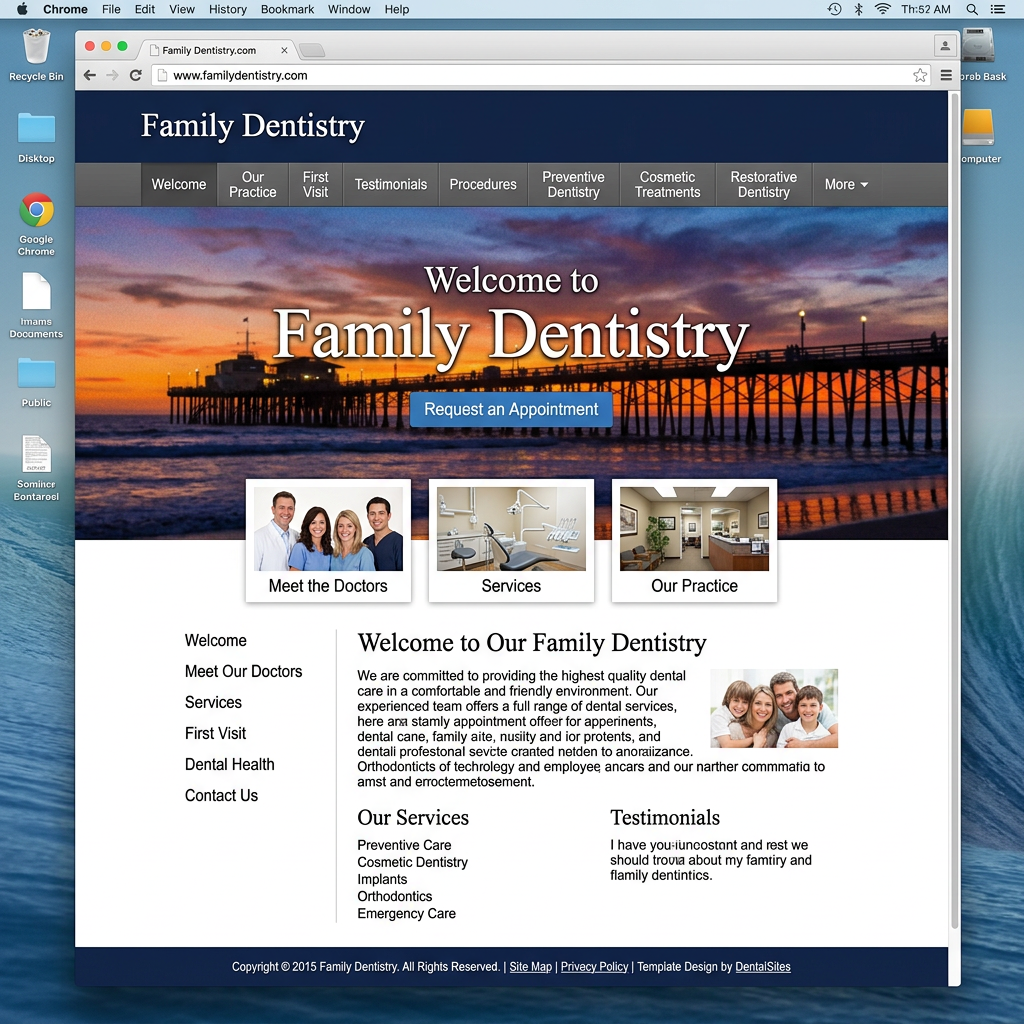
- ✗ Not mobile-friendly
- ✗ No service-specific landing pages
- ✗ No local SEO structure
- ✗ Minimal schema markup
After — Modern Redesign
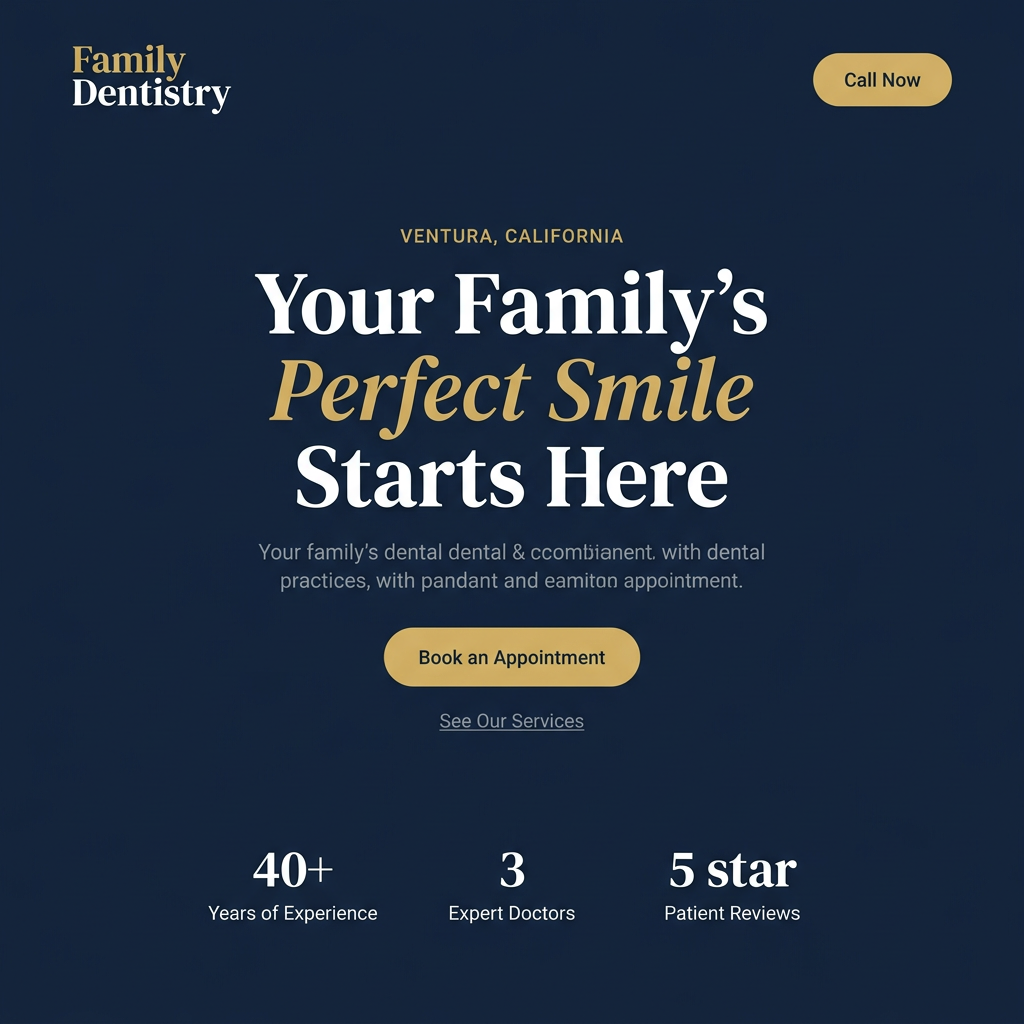
- ✓ Mobile-first, fast-loading design
- ✓ Location-optimized copy throughout
- ✓ Structured service sections
- ✓ LocalBusiness schema + review schema
Why "Dentist Near Me" Is One of the Most Competitive Local Searches
Dental searches are dominated by high-intent, near-me queries. When someone searches "dentist near me," "family dentist Ventura," or "teeth cleaning Ventura CA," Google evaluates three things: proximity, relevance, and prominence.
Proximity is out of your hands. But relevance and prominence are directly influenced by your website — and this practice's old site scored poorly on both counts.
The core problem:
Google could not clearly understand what services the practice offered, where they were located, or why they were a trusted choice. The site had no semantic structure, no local keyword optimization, and no schema that told Google "this is a dental office serving Ventura, CA."
What the Old Site Was Missing
| SEO Factor | Old Site | New Site |
|---|---|---|
| Mobile-friendly design | No — text overflows on phones | Yes — built mobile-first |
| Page speed | Slow — heavy template assets | Fast — lean, optimized code |
| City + service keywords | Buried or missing | Woven into headings and copy |
| LocalBusiness schema | None | Implemented on every page |
| Review schema | None | Patient testimonials marked up |
| Service pages | Single generic page | Dedicated sections per service |
| Clear call-to-action | Multiple competing links | One primary CTA per section |
| Core Web Vitals | Failing | Passing |
The Redesign Strategy: Built Around Local Search
Every decision in the redesign was made with two goals in mind: convert visitors who land on the site, and signal relevance to Google for local dental searches.
Location-First Copywriting
The hero section leads with 'Ventura, California' as a visual anchor — immediately signaling the geographic context to both visitors and search engines. City-specific phrases like 'serving Ventura families' appear naturally throughout the page copy, not stuffed awkwardly into footers.
Service Sections With Keyword Intent
Instead of a single generic 'Services' link, the new site dedicates a visible section to each core offering — cleanings, cosmetic dentistry, dental implants, Invisalign, and emergency care. Each label mirrors how patients actually search Google.
Trust Signals Above the Fold
The stats bar — 40+ years of experience, 3 expert doctors, 5-star patient reviews — appears immediately after the hero. Trust signals reduce bounce rate, which is a behavioral signal Google uses to evaluate page quality.
Structured Data (Schema Markup)
The new site implements LocalBusiness schema, DentistSchema, and review markup so Google can pull rich information into search results: address, hours, phone, star rating. This directly supports Google Maps ranking and the local 3-pack.
One Clear Call-to-Action Per Section
The old site had competing links to 'Request Appointment,' 'Call Us,' 'Read More,' and multiple navigation dropdowns on every screen. The new site uses a single primary CTA — 'Book an Appointment' — reducing decision fatigue and increasing conversion rate.
Why Google Cares About Your Website Design
A lot of dental practices think Google Business Profile optimization is all that matters for local SEO. It matters — but your website is the foundation. Here's why:
- 1Google uses your website to verify that your Google Business Profile information is consistent and trustworthy.
- 2Core Web Vitals (page load speed, visual stability, interactivity) are a direct ranking factor. A slow template site fails these tests.
- 3Mobile-friendliness is a prerequisite for ranking in mobile search — where over 70% of 'near me' searches happen.
- 4Schema markup helps Google extract key business data and display it in rich results, Knowledge Panels, and Maps.
- 5High bounce rates from a poor experience tell Google the site isn't satisfying the search intent — and rankings drop.
What This Means for Dental Practices in Ventura County
If your dental practice has been around for years but you're not showing up when new patients search "dentist near me" or "family dentist [your city]," the most likely culprit is a website that Google can't read properly.
The good news: a well-executed redesign creates a durable SEO asset. Unlike paid ads that stop the moment you stop paying, a properly built website continues to accumulate authority and rank higher over time.
The practices that win local dental searches aren't necessarily the ones with the most reviews or the longest track record. They're the ones whose websites make it easiest for Google to understand, trust, and recommend them.
Want to See How Your Dental Website Stacks Up?
We offer free website audits for dental and healthcare practices in Ventura County. We'll show you exactly what's holding your site back from ranking for "dentist near me."
See Our Web Design Services →